Programmatic buying has changed how most digital media is bought, and audio is no exception. Instead of negotiating every placement by phone and email, advertisers can now buy streaming, podcast, and even broadcast radio inventory automatically, with data-driven targeting and consistent reporting. This guide explains what programmatic audio advertising is, how it works behind the scenes, how it applies to each audio channel, and how buyers and publishers can get the most from it.
What Is Programmatic Audio Advertising?
Programmatic audio advertising is the automated buying and selling of audio ad impressions through software. When a listener starts a stream or downloads a podcast episode, an ad request is sent to the market, buyers bid for the impression based on the audience and context, and the winning ad is delivered to the listener, usually in a fraction of a second.
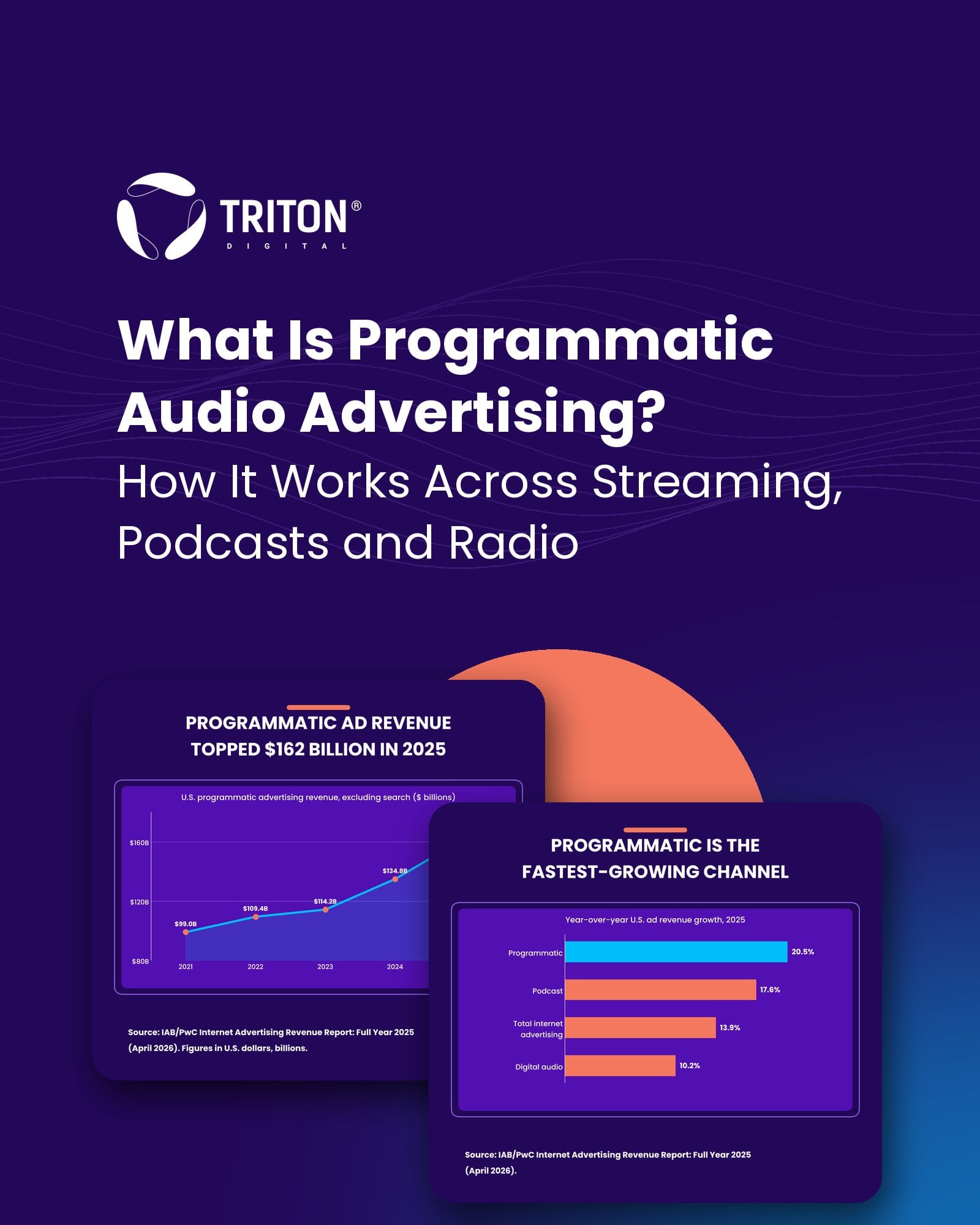
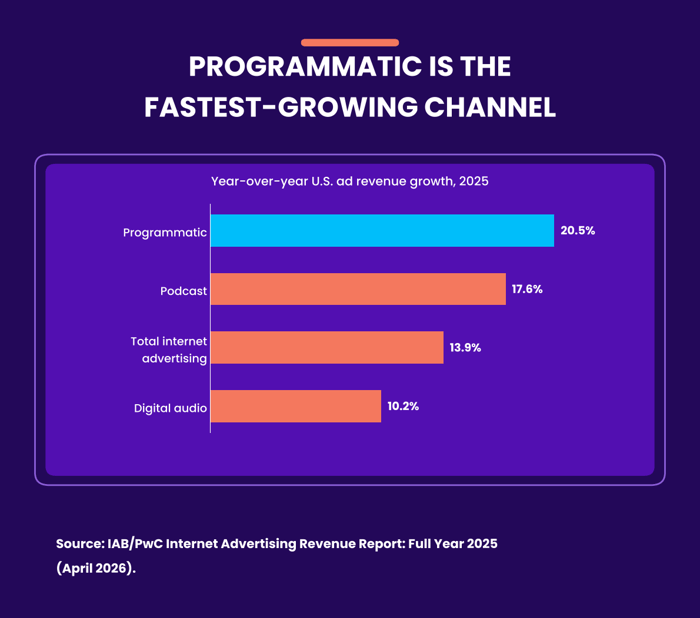
Programmatic is now the dominant way digital advertising is traded. The IAB/PwC Internet Advertising Revenue Report found that U.S. programmatic ad revenue, excluding search, reached $162.4 billion in 2025, up 20.5% from the year before.
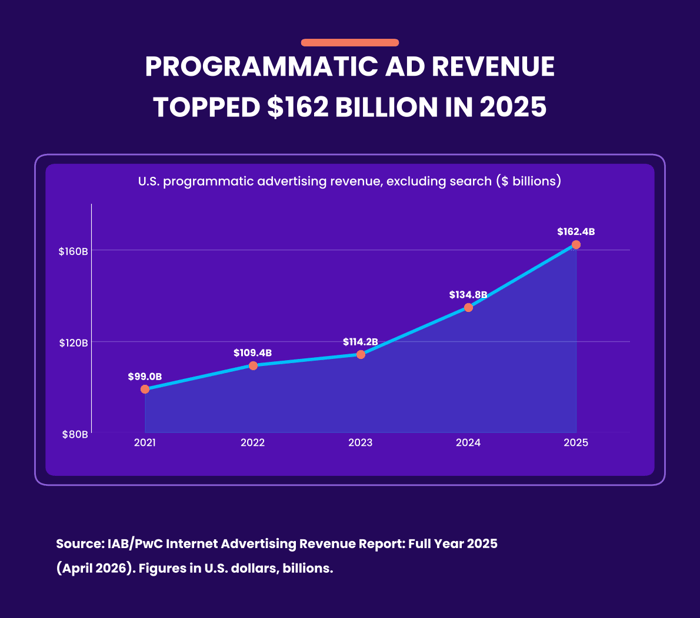
Source: IAB/PwC Internet Advertising Revenue Report: Full Year 2025
Audio is following the same path. According to eMarketer data cited in this report on broadcast radio in DSPs, programmatic accounted for 30% of U.S. digital audio ad spend in 2025, up from 22% in 2022.
How Programmatic Audio Works
Every programmatic audio transaction moves through the same basic chain:
- The publisher (a streaming service, podcast network, or radio broadcaster) has an ad break to fill.
- A supply-side platform (SSP) packages that impression with information such as content type, location, and device, and offers it to buyers.
- A demand-side platform (DSP) evaluates the impression on behalf of advertisers and submits a bid, usually through the OpenRTB protocol.
- The winning ad is delivered and stitched into the audio stream server-side, so the listener hears it seamlessly.
Audio ads are described using the IAB Tech Lab's VAST standard, which incorporated audio ad support in version 4.1. That shared standard is what lets one campaign run across many publishers and platforms.
Programmatic Across Streaming, Podcasts and Radio
Streaming Audio
Music services and internet radio streams were the first audio channels to go programmatic. Because each stream reaches one listener in real time, buyers can target by location, device, time of day, and audience segment, much like other digital media.
Podcasts
Podcast inventory became available programmatically once publishers adopted dynamic ad insertion, which places ads at the moment an episode is downloaded or streamed. That makes every new and back-catalog episode a source of targetable impressions. Our guide to programmatic advertising on podcasts covers this in more depth.
Broadcast Radio
AM/FM radio still reaches enormous audiences, and a growing share of that inventory can now be bought through DSPs. This lets brands plan broadcast and digital audio together in one campaign rather than in separate silos.
Underneath all three channels is a large, habitual audience. Edison Research's Infinite Dial 2026 found that 76% of Americans age 12 and older listened to online audio in the last week, an estimated 219 million people.
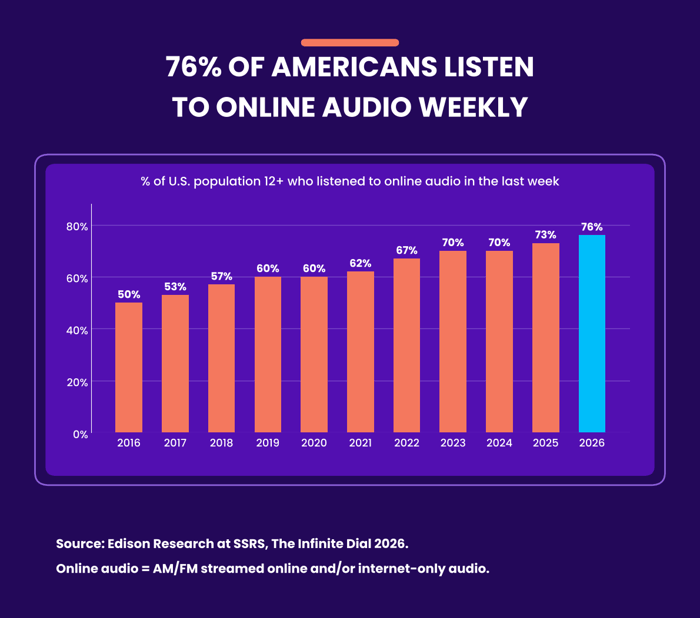
Source: Edison Research at SSRS, The Infinite Dial 2026
Programmatic Deal Types
- Open auction: Any qualified buyer can bid in real time. It offers the widest reach and the most flexible pricing.
- Private marketplace (PMP): An invitation-only auction where selected buyers bid on a publisher's inventory.
- Preferred deal: A buyer gets a fixed price on inventory before it goes to auction, without a volume guarantee.
- Programmatic guaranteed: Price and volume are both locked in, combining the certainty of a direct buy with programmatic automation.
Targeting and Privacy
Programmatic audio can reach listeners by geography, device, content genre, time of day, and first- or third-party audience data. As privacy rules tighten, contextual signals such as the topic and tone of the content are becoming just as important as personal data. Our article on privacy-first targeting covers how to reach the right listeners in a consent-driven market.
Measuring Programmatic Audio Campaigns
Because ads are delivered server-side, every programmatic audio impression can be counted as it plays, and results can be reported alongside display, video, and CTV in the same DSP. For podcasts, certified measurement such as Triton's IAB-certified Podcast Metrics gives buyers and sellers a common, trusted currency. Brand suitability tools help keep ads away from content a brand wants to avoid, and attribution studies can connect ad exposure to website visits, app installs, and sales. Together, these make it possible to judge audio on outcomes rather than on reach alone.
Why Buyers and Publishers Are Investing
Programmatic is growing faster than the wider digital market. In 2025, programmatic revenue grew faster than podcast, total internet, and digital audio advertising, according to IAB/PwC.
Source: IAB/PwC Internet Advertising Revenue Report: Full Year 2025
For advertisers, programmatic audio means scale across many publishers in one buy, precise targeting, flexible budgets, and reporting that sits alongside the rest of the digital plan.
For publishers, it brings incremental demand and helps fill inventory that direct sales can't reach. Getting the most from it takes careful yield management and a clear view of metrics like delivery rate, which shows how many auction wins become delivered impressions.
How to Get Started
Buyers can access premium audio inventory through leading DSPs. The Triton Audio Marketplace aggregates broadcast radio, podcast, and streaming audiences at scale, and Triton's DSP integrations list the platforms connected to it. Publishers can monetize live, on-demand, and podcast audio through the Triton Ad Platform (TAP).
Triton Digital connects both sides of the audio market. Contact us at marketops@tritondigital.com to learn how programmatic audio can fit into your plans.
