

Updated Oct 25, 2026
Audiences now spend a large share of their day with streaming radio, music playlists, and podcasts, and advertisers are following them. Podcast ad spending rose 26% year over year in Q3 2025, and audio and podcast share of programmatic spending was expected to grow from 7% to 9%, according to Triton's 2026 programmatic audio outlook. For publishers, that makes programmatic audio monetization one of the most important revenue levers available. This guide covers five publisher monetization strategies, how to choose an SSP, and what CPMs to expect from different types of demand.
Audio still receives less ad spend than its audience share suggests: it accounts for 31% of consumers' media time but only 9% of ad budgets, based on an AdsWizz report cited in the same Triton outlook. That gap is an opportunity for publishers who make their inventory easy to find, buy, and measure.
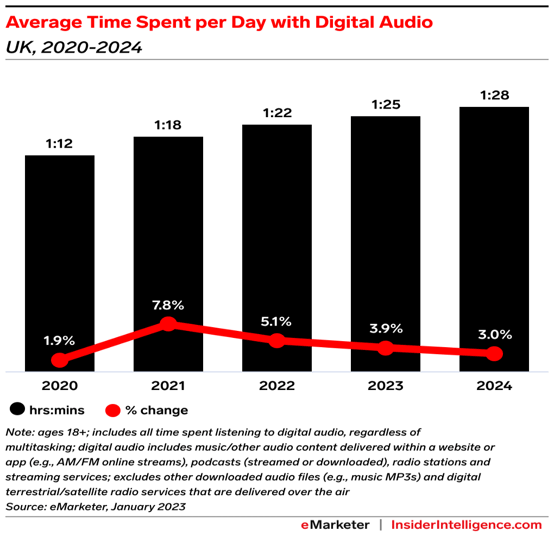
Whether you are a radio broadcaster streaming your stations digitally, a podcast network, a music service, or an in-game app developer, these five tactics will help you build revenue and monetize your audio inventory.
5 Audio Monetization Tactics for Publishers
1. Build Healthy Scale
Advertisers want to deliver impressions on quality inventory, at scale. Test multiple stations, podcasts, or playlists across genres to see which ones draw a large audience. Most audio ads are sold on their contextual value, so make sure each piece of content has a recognizable and distinct listener demographic. Balance trending content with niche formats that serve a specific group of listeners, and use seasonal content, episodic podcasts, and pop-up stations to reach new audiences while keeping existing listeners engaged. In digital audio, you can add, switch, and drop formats quickly, so test and adjust.
2. Make Your Inventory Addressable
Where possible, make listeners addressable in the programmatic bid request by passing advertising IDs, such as a mobile device ad ID or a web-based identifier. These impressions are more valuable to advertisers because they carry more audience data, which improves targeting in the DSP. In Triton's experience, CPMs for addressable impressions can be up to three times higher than for impressions without an identifier. Work with your technology partner and app developer to pass identifiers for your listeners in a privacy-compliant way.
3. Have a Programmatic-Ready Media Kit
A strong media kit explains in 10 slides or fewer what audio content you have, who your audience is, what makes your content unique, which ad formats you support, and how buyers can access your inventory through programmatic channels, including any private marketplace (PMP) deals. Buyers will compare your kit with other publishers', so keep it clear and current. Add case studies or advertiser testimonials when you have them, and update the kit whenever you add new content or features.
4. Be Ready to Respond to Programmatic Buyers
Appoint a point of contact or a small team to lead conversations with programmatic buyers. This team should understand your audio inventory and audience and have some background in programmatic advertising. Give them the resources and platform to set up deals, monitor performance, optimize yield, and generate reports. The more proactive and current they are, the better prepared they will be to answer advertiser questions and grow programmatic revenue.
5. Find the Right Programmatic Partners
Buyer diversity raises auction pressure and helps you achieve higher clearing prices, so connect to as many ad networks and DSPs as you can. Evaluate your technology and commercial partners regularly on integrations, expertise, sales representation, and, above all, revenue yield. Industry events and conversations with other publishers are a good way to keep up with changes in technology and privacy.
Choosing an SSP for Audio Monetization
A supply-side platform (SSP) connects your audio inventory to programmatic buyers and runs the auctions that set your price. If you are asking which SSP is best for programmatic audio monetization for a podcast network or streaming publisher, the right answer depends on your inventory, but the strongest audio SSPs have a few things in common:
- Audio-native ad delivery. The SSP should work with dynamic ad insertion for podcasts and server-side insertion for live streams, so ads are stitched into the audio cleanly.
- Broad demand access. Look for integrations with many DSPs, plus support for open exchange, private marketplace, and direct deals, so more buyers compete for each impression.
- Yield and floor controls. You should be able to set and adjust floor prices by content, geography, and audience, and see how each change affects revenue.
- Transparent reporting. Reporting should show fill rate, CPM, and revenue by deal and by buyer, ideally with independent audience measurement behind it.
- Identity and addressability support. The SSP should pass identifiers and audience signals in a privacy-compliant way, since addressable impressions earn higher CPMs.
- Video support. As more podcasts add video, check whether the platform can monetize video episodes and report on audio and video together.
Triton Digital's Triton Ad Platform (TAP) gives publishers one place to manage direct-sold and programmatic campaigns across live streams, podcasts, and on-demand audio. The Triton Audio Marketplace (TAM) connects that inventory to programmatic buyers through more than 60 DSP integrations.
CPM Expectations by Demand Type
Not every impression earns the same price. What a buyer will pay depends on the type of demand, how the inventory is sold, and how much data comes with it. Use the table below as a general guide.
| Demand type | What buyers want | CPM expectation |
|---|---|---|
| Brand demand | Reach, brand suitability, and premium context | Usually the highest CPMs, especially for curated or private marketplace deals on well-known shows and stations |
| User acquisition (UA) and performance demand | App installs, sign-ups, and other measurable actions at a target cost | Usually lower and more variable CPMs, since bids are tied to cost per action, but often adds volume and fill |
| Addressable impressions | Audience data for targeting and measurement | Up to three times higher than impressions without an identifier, in Triton's experience |
| Open exchange backfill | Scale at the lowest price | The lowest CPMs, but helps fill impressions that would otherwise go unsold |
For broader benchmarks, North American Media Experts puts standard programmatic streaming audio at $10 to $18 CPM and programmatic podcast inventory with dynamic ad insertion at $15 to $25 CPM, in its 2026 programmatic audio benchmarks (July 2026). Actual rates vary widely by market, genre, and audience.
CPM alone does not tell you which demand is worth more. Direct sales, programmatic deals, and backfill each play a different role, and the goal is the highest total revenue, not the highest single price. To learn how to balance them, read Building a Revenue-Driven Audio Marketplace for Publishers.
Audio Monetization FAQs
Which programmatic audio monetization platforms for publishers pay best?
The platforms that pay best are the ones that bring the most competing buyers to your inventory and give you control over pricing. Compare SSPs on the number of DSP integrations, support for private marketplace and direct deals, floor price controls, addressability, and reporting transparency. Then test: run your inventory through each partner and compare total revenue, not just CPM.
What is the best SSP for audio inventory monetization for a podcast network?
A podcast network needs an SSP that works with dynamic ad insertion, reaches a wide range of DSPs, supports both direct-sold and programmatic campaigns, and reports results by show and by buyer. Measurement matters too, because buyers pay more for inventory they can verify.
What tools should I look at for streaming video ad monetization reporting and yield?
Look for a platform that reports audio and video results together, including fill rate, CPM, and revenue by deal, and that lets you adjust floor prices based on that data. As video podcasts grow, combined reporting makes it easier to see where each format earns the most.
What are the most effective publisher monetization strategies for audio?
Build scale in content with a clear audience, make impressions addressable, keep a programmatic-ready media kit, assign a team to work with buyers, and connect to as many demand partners as possible. Then manage pricing across direct, programmatic, and backfill to maximize total revenue.
Monetize Your Audio Inventory With Triton
If you are an audio publisher looking for monetization solutions to grow programmatic revenue, contact us at solutions@tritondigital.com.
