Your podcast hosting platform does far more than store audio files. It controls how your shows reach listeners, how your audience is measured, how much revenue each episode can earn, and how easily your team can grow. For publishers and networks managing many shows, the wrong choice can cap growth for years. This guide covers what to look for when choosing a podcast hosting platform, and the questions to ask before you commit.
Why the Hosting Decision Matters More Than Ever
The podcast audience has never been larger. According to Edison Research's Infinite Dial 2026, 45% of Americans age 12 and older listened to or watched a podcast in the last week, an estimated 130 million people and more than six times the share in 2013.
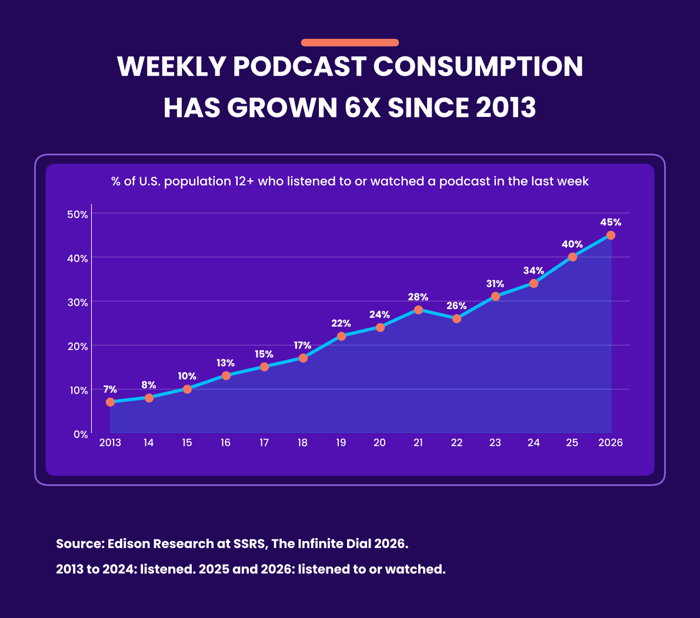
Source: Edison Research at SSRS, The Infinite Dial 2026
Advertisers have followed. The IAB/PwC Internet Advertising Revenue Report put U.S. podcast ad revenue at $2.86 billion in 2025, up 17.6% year over year. A growing audience and a growing ad market raise the stakes on the platform behind your shows. For context on the demand side, see our complete guide to podcast advertising.
1. Reliable Hosting and Wide Distribution
Start with the fundamentals: fast, reliable delivery of every episode and simple distribution to every major listening app through RSS. Look for customizable feeds, scheduled publishing, embeddable web players, and tools to publish to your website and social channels. Ask about uptime, file size limits, and how the platform handles spikes in downloads when a show takes off.
2. Full Support for Video Podcasts
Podcasting is now a dual-format medium. Edison found that 58% of Americans consumed a podcast in the last month, and most of them both listened and watched.
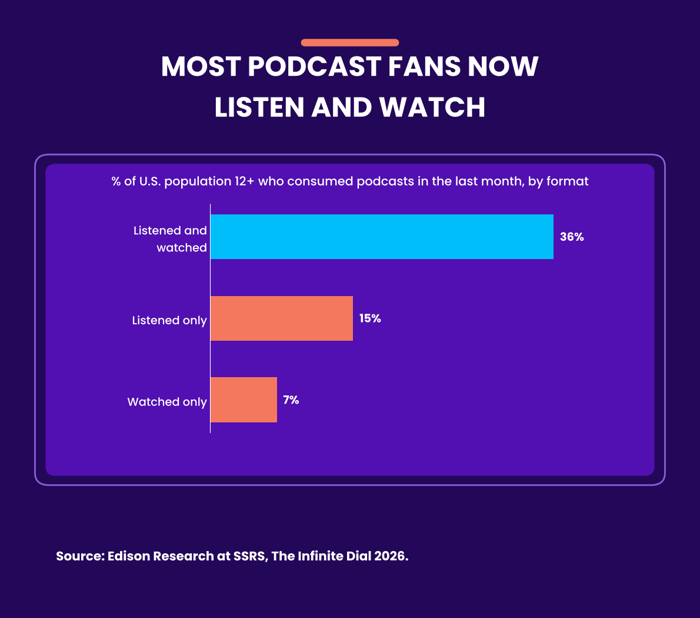
Source: Edison Research at SSRS, The Infinite Dial 2026
Your platform should let you upload, distribute, and monetize video episodes alongside audio, including to video-enabled apps such as Apple Podcasts. Apple's own Apple Podcasts for Creators site outlines the formats and requirements for publishing there. Our report on video podcasting in 2026 covers what the data says about where video adds the most value.
3. Certified, Trustworthy Analytics
Advertisers buy on numbers, so your numbers need to be credible. Choose a platform whose downloads are measured against the IAB Tech Lab Podcast Measurement Technical Guidelines, which filter out bots and duplicate requests. Triton's IAB-certified Podcast Metrics gives publishers a standard currency that buyers recognize, plus audience insight to help package and sell inventory.
4. Built-In Monetization
For most publishers, monetization is the main reason the hosting decision matters. Look for:
- Dynamic ad insertion (DAI), so every new and back-catalog episode can carry fresh, targeted ads. Our guide to dynamic ad insertion explains how it works.
- Ad serving for direct and programmatic campaigns in one workflow, such as the Triton Ad Platform (TAP).
- Access to programmatic demand to fill inventory your sales team doesn't sell directly.
- Premium subscriptions for ad-free, bonus, or members-only content. Read how Omny Studio supports Apple Podcasts Subscriptions.
5. Tools Built for Networks and Teams
Networks and broadcasters need more than a single-show dashboard. Look for multi-show management, user roles and permissions, network-level reporting, and the ability to capture and archive live radio broadcasts as podcast episodes.
6. AI Tools That Speed Up Production
Modern platforms use AI to cut post-production time. Useful features include accurate transcription, automatic chapter and ad markers, title suggestions, and generated show notes and summaries that improve search visibility.
7. Brand Safety and Contextual Insight
Advertisers increasingly want to know what is said inside an episode, not just which genre it belongs to. Content intelligence tools such as Sounder analyze episodes at the topic level, helping publishers prove brand suitability and package inventory for contextual campaigns.
8. Room to Grow
The audience is still expanding: Edison reports that 80% of Americans have now consumed a podcast at some point, and more of them are tuning in every week.
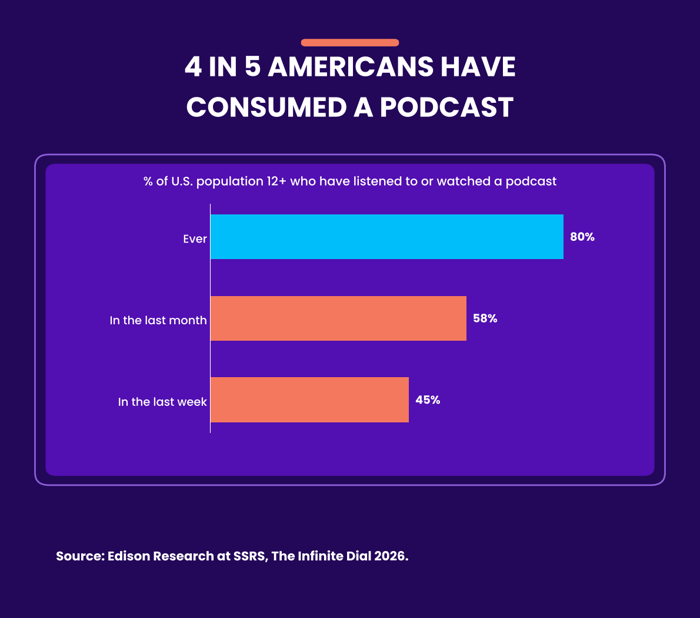
Source: Edison Research at SSRS, The Infinite Dial 2026
Choose a platform that fits where you are today and where you plan to be. Independent creators and growing networks may prefer an all-in-one tool such as Spreaker, which combines hosting, distribution, and monetization. Large publishers and broadcasters typically need an enterprise platform such as Omny Studio, which manages audio and video at scale.
9. Support, Migration and Partnership
Switching hosts is a big project, especially for a network with hundreds of shows and years of back catalog. A good platform makes migration painless by redirecting existing RSS feeds so subscribers follow your shows automatically, preserving episode history, and keeping downloads flowing without interruption. Just as important is the team behind the software: dedicated account support, clear documentation, and a partner who understands both content and advertising. For publishers that sell ads, the hosting provider often becomes a revenue partner, so look for one with deep relationships across the advertising market, not just storage and bandwidth.
Questions to Ask Before You Switch
- How are downloads measured, and is that measurement certified?
- Can I distribute and monetize video episodes as well as audio?
- What ad demand and ad serving tools come with the platform?
- How does migration work, and will my existing feeds and subscribers move with me?
- What support and onboarding will my team receive?
Getting Started
The right podcast hosting platform helps you reach more listeners, prove your audience to advertisers, and earn more from every episode. Triton Digital, a leader in digital audio advertising solutions for podcasters and broadcasters, brings hosting, certified measurement, and monetization together. Contact us at marketops@tritondigital.com to find the right fit for your shows.
